
A wind damage roof insurance claim goes best when you protect the house first, document everything before repairs, and know which of your policies actually covers the storm. That last part trips up a lot of Hawaii homeowners: here, hurricane damage is often excluded from the standard homeowners policy and covered by a separate hurricane policy or endorsement with its own, often larger, deductible. This guide walks through the claim step by step, with the Hawaii-specific details mainland guides leave out.
This is general information, not legal or insurance advice. Coverage depends on your policy wording and the facts of the loss. Hawaii insurance details are from the state Insurance Division, checked November 18, 2026.
If you are on Maui, Lava Roofing can tarp the roof and photograph the damage before your adjuster visits; the steps below apply anywhere in Hawaii.
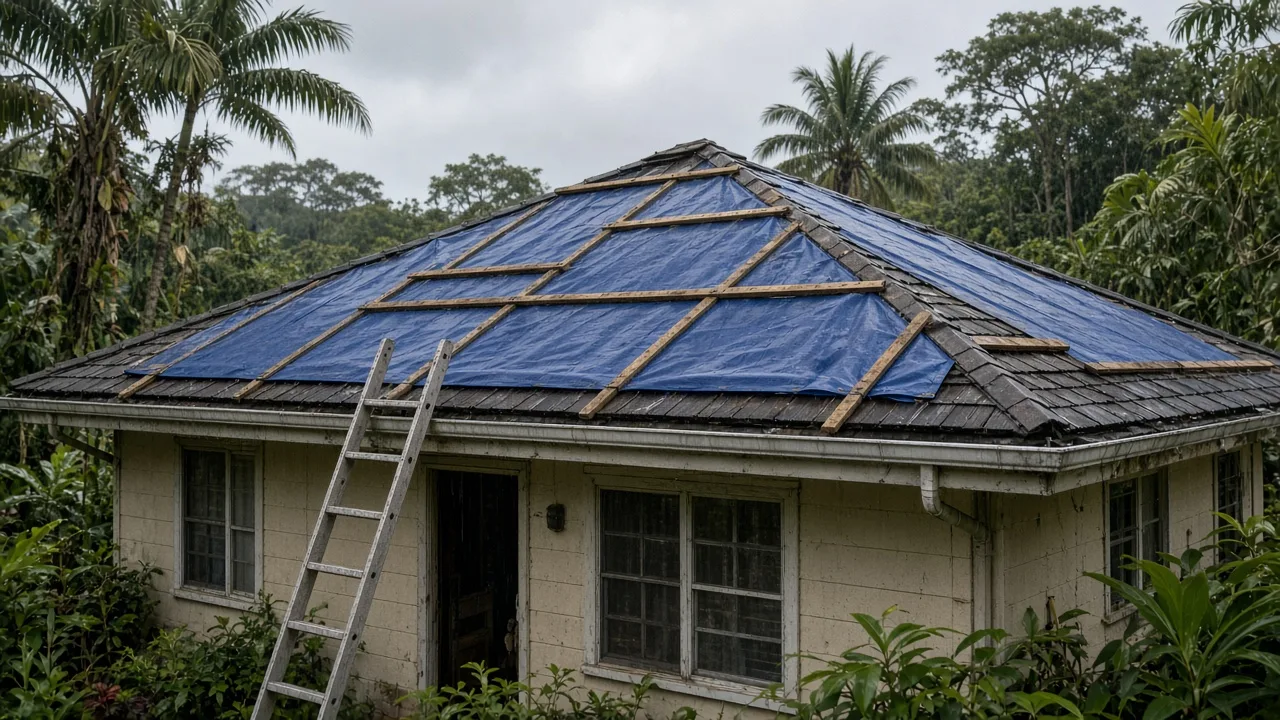
Does homeowners insurance cover wind damage to a roof?
Usually, for sudden damage from a covered windstorm, such as shingles torn off, metal panels lifted, or a tree limb punched through the roof, along with rain that gets in through that opening. Insurers generally do not pay for wear and tear, old age, or poor maintenance. The Insurance Division’s 2026 storm guide puts it this way: homeowners insurance may cover certain wind- or rain-related damage, depending on the cause and the policy.
The Hawaii difference: hurricane coverage is often separate
According to the Hawaii Insurance Division, many consumers do not realize that most standard homeowners and renters policies do not cover hurricane and flood damage. Hurricane insurance must be purchased separately or added as an endorsement. The division also notes that insurers may stop writing new policies (a moratorium) once a tropical storm approaches, so coverage has to be in place before a storm, not during one. The Central Pacific hurricane season runs June 1 through November 30 (National Weather Service Honolulu).
Which policy pays? A quick Hawaii guide
| What happened | Policy that usually responds | Deductible to expect | Check in your documents |
|---|---|---|---|
| Trade-wind gust or non-hurricane storm lifts shingles or panels | Standard homeowners policy | Your regular deductible (often a flat dollar amount) | Wind or windstorm wording, any wind exclusions |
| Damage during a hurricane, as defined by your policy | Separate hurricane policy or hurricane endorsement, if you have one | Hurricane deductible, often a percentage of your dwelling limit | The hurricane definition and trigger, deductible percentage or amount |
| Rain enters through a wind-made opening in the roof | Whichever policy covers the wind event | Same as the wind event | Water damage wording |
| Storm surge or rising water floods the house | Flood insurance (NFIP or private), not homeowners | Flood policy deductible | Whether you have flood coverage; NFIP has a 30-day waiting period |
| Old roof fails in ordinary weather | Usually not covered (wear and tear) | n/a | Maintenance and age exclusions |
An older Insurance Division release explains that hurricane policies cover water damage that results from wind damage to the home’s exterior, for example debris puncturing the roof and rain pouring in, while storm surge and rising water are flood losses (DCCA, 2013). How the adjuster labels the cause of the damage can decide which deductible applies, which is why documentation matters so much.
What wind damage to a roof looks like
You do not need to climb onto the roof to spot most wind damage. Walk the property and look from the ground, and from inside:
- Missing, creased, or lifted shingles; shingles or granules in the yard
- Metal panels with raised edges, loose or missing screws, or bent ridge caps and trim
- Damaged or missing flashing around vents, skylights, and the chimney
- Ridge vent or turbine vent pulled loose
- Dents, punctures, or scrapes from flying debris and branches
- New water stains on ceilings or walls, or a damp smell in the attic
For a fuller checklist, see our guide to the top signs your roof needs repair after a storm.
How to file a wind damage roof insurance claim, step by step
- Stay safe. Stay off a wet or damaged roof and away from downed lines. Catch drips indoors with buckets and move valuables.
- Document before anything is moved. Take date-stamped photos and video of the roof from the ground, the yard debris, and every interior stain or wet area. Photograph the whole house, not only the damage, so the adjuster can see the overall condition.
- Prevent further damage. Most policies expect reasonable steps to protect the home. Have a roofer tarp the opening, and keep receipts for the tarp and any emergency work, since they are often part of the claim. Do not make permanent repairs before the adjuster has seen the damage unless your insurer agrees.
- Notify your insurer promptly. Call your agent or insurer, get a claim number, and ask which policy the loss is filed under (homeowners or hurricane) and what deductible applies. Write down every call: date, name, and what was said.
- Get a professional roof inspection. A licensed roofer can document damage you cannot see from the ground and write a detailed scope of repairs. Check the license on the DCCA license search.
- Meet the adjuster. Try to have your roofer there for the inspection so both are looking at the same damage. Share your photos and the contractor’s scope.
- Review the estimate and settlement. Compare the insurer’s scope with your roofer’s line by line. Missing items (underlayment, flashing, vents, code upgrades, GET) are common reasons for gaps.
- Repair, and keep the paperwork. Keep the final invoice, photos of the finished work, and warranty documents with your policy.
Evidence checklist for your claim
| Evidence | Why it helps | When to collect it |
|---|---|---|
| Wide and close-up photos and video, date-stamped | Shows the damage and the overall condition of the roof | Immediately, before cleanup |
| Photos of yard debris (shingles, panels, branches) | Links the damage to the storm | Immediately |
| Interior photos of stains and wet areas | Supports the water damage portion | Immediately, and again as stains spread |
| Weather information for the date (storm name, warnings) | Helps establish the cause and which policy responds | Within days |
| Roofer’s written inspection and scope with photos | Documents damage you cannot see from the ground | Before the adjuster visit if possible |
| Receipts for tarping and emergency work | Often reimbursable; shows you mitigated damage | As you pay them |
| Older photos of the roof, past invoices, and roof age | Counters a “wear and tear” argument | Gather from your files |
| Call log with your insurer | Keeps the timeline clear | Throughout the claim |
Deductibles: is it worth filing?
Run the numbers before you file. If the repair estimate is close to or below your deductible, a claim may not pay anything and still goes on your claims history. Hurricane deductibles deserve special attention: when they are a percentage of the dwelling limit, the dollar amount can be large on a home insured at Hawaii rebuild costs.
| Dwelling coverage limit | 1% deductible | 2% deductible | 5% deductible |
|---|---|---|---|
| $500,000 | $5,000 | $10,000 | $25,000 |
| $750,000 | $7,500 | $15,000 | $37,500 |
| $1,000,000 | $10,000 | $20,000 | $50,000 |
Imagine a homeowner in Kona whose roof loses a section of shingles in a non-hurricane windstorm. With a flat $1,000 deductible and a $6,000 repair estimate, filing makes sense. If the same damage happened during a defined hurricane event with a 2 percent deductible on a $750,000 dwelling limit, the $15,000 deductible would swallow the claim. (Illustrative example.)
Actual cash value vs replacement cost
Your settlement also depends on how the roof is valued. A replacement cost policy pays to repair or replace with similar materials, minus the deductible; some insurers pay the depreciated amount first and the rest after the work is done. An actual cash value policy subtracts depreciation for the roof’s age, so an older roof can pay out much less. Some policies use a roof payment schedule that depreciates by age. Your declarations page and roof endorsements will say which applies.
Why roof claims get denied, and what you can do
- Wear and tear or age. The insurer says the roof failed from age, not wind. Older photos, maintenance records, and a roofer’s report on storm-specific damage (fresh creases, debris impacts) help.
- Late notice or no mitigation. Report quickly and tarp quickly.
- Excluded cause. For example, flood, or a hurricane loss without hurricane coverage.
- Scope disputes. The insurer approves a patch, your roofer says the damage requires more. Ask for a reinspection with your contractor present.
If you disagree, ask for the decision and the policy language in writing, provide additional evidence, and ask whether your policy has an appraisal provision. If you believe a claim has been handled unfairly, you can contact the Hawaii Insurance Division to file a complaint.
Protect your roof before the next storm
Hurricane straps or clips that tie the roof to the walls, a well-fastened roof covering, and sealed flashing all reduce wind damage. The Insurance Division has also suggested asking your agent whether your insurer offers premium credits for hurricane straps or clips (DCCA). A pre-season roof inspection is the simplest way to catch loose shingles, panels, and flashing before they become a claim.
Before each hurricane season, work through the Maui roof hurricane prep checklist (it includes a free printable PDF), and if you need to hire help, see how to choose a roofer in Hawaii.
How Lava Roofing helps with storm claims
If you are starting a wind damage roof insurance claim, a licensed roofer’s photos and written scope are often the documents that make the difference.
After a storm, Lava Roofing runs emergency tarping seven days a week and usually has crews on site the same day. The crew documents the damage with photos, writes a detailed scope, and works with your adjuster, then comes back for the permanent repair. Insurance assistance is included when the damage qualifies for a claim. Call the office for your island: Maui (808) 793-6635, Lahaina (808) 793-5520, Kona (808) 746-2314, Hilo (808) 825-6463, or contact us online. Licensed and insured, CT-39063.
Frequently asked questions
What is evidence of wind damage on a roof?
Missing, creased, or lifted shingles; lifted metal panels or loose screws; damaged flashing or ridge vents; debris impacts; shingles or granules in the yard; and new ceiling stains. Date-stamped photos taken right after the storm are the best evidence.
What is the deductible for wind damage in Hawaii?
For ordinary windstorms it is usually your regular homeowners deductible. For hurricane damage, a separate hurricane policy or endorsement often has its own deductible, frequently a percentage of the dwelling limit. Your declarations page lists both.
Does homeowners insurance cover straight-line wind damage?
Generally yes, if wind is a covered peril and the damage is sudden rather than wear and tear. In Hawaii, check whether the event falls under your policy’s hurricane definition, because hurricane losses are often excluded from the standard policy.
Should I tarp my roof before the adjuster comes?
Yes. Most policies expect you to take reasonable steps to prevent more damage. Photograph the damage first, have a roofer install a temporary tarp, keep the receipt, and hold off on permanent repairs until the insurer has inspected or agreed.
How long do I have to file a roof damage claim?
Policies require prompt notice, and many set specific deadlines. Report the damage as soon as you can after the storm and check your policy for any time limits.
Will filing a roof claim raise my premium?
It can. Claims history is one factor insurers use. If the repair cost is close to your deductible, it may be better not to file; ask your agent how a claim could affect your policy.