
The Central Pacific hurricane season runs from June 1 through November 30, though tropical cyclones can form at any time of year (NOAA Central Pacific Hurricane Center). Maui Emergency Management Agency puts it simply: the best time to prepare for hurricanes is before the season begins (MEMA). This free Maui roof hurricane prep checklist covers the part of the house that takes the most wind: the roof, gutters and everything attached to it.
Use the timeline table for the big picture, then the detailed checklists below. Everything is also in a two-page printable you can keep with your emergency kit.
Download the free printable checklist (PDF, 2 pages)
Key dates and numbers from official sources
- Hurricane season: June 1 to November 30 in the Central Pacific (NOAA CPHC).
- Alerts: sign up for MEMA Alerts by texting Mauialerts to 38276, and check your evacuation zone in the Genasys Protect app (MEMA).
- Two Weeks Ready: MEMA asks households to keep at least 14 days of supplies, including one gallon of water per person per day (MEMA).
- Flood insurance: most policies take 30 days to go into effect, so buy early (FEMA).
- After the storm: nearly half of hurricane fatalities occur after the storm has passed (NOAA).
Roof hurricane prep timeline: what to do and when
This table is an original summary that puts NOAA, MEMA and FEMA guidance in roof-first order.
| When | Roof, yard and paperwork tasks |
|---|---|
| Months before (ideally before June 1) |
|
| A week before (storm in the forecast) |
|
| 24 hours before (watch or warning) |
|
| After the storm |
|
Before the season: roof inspection checklist
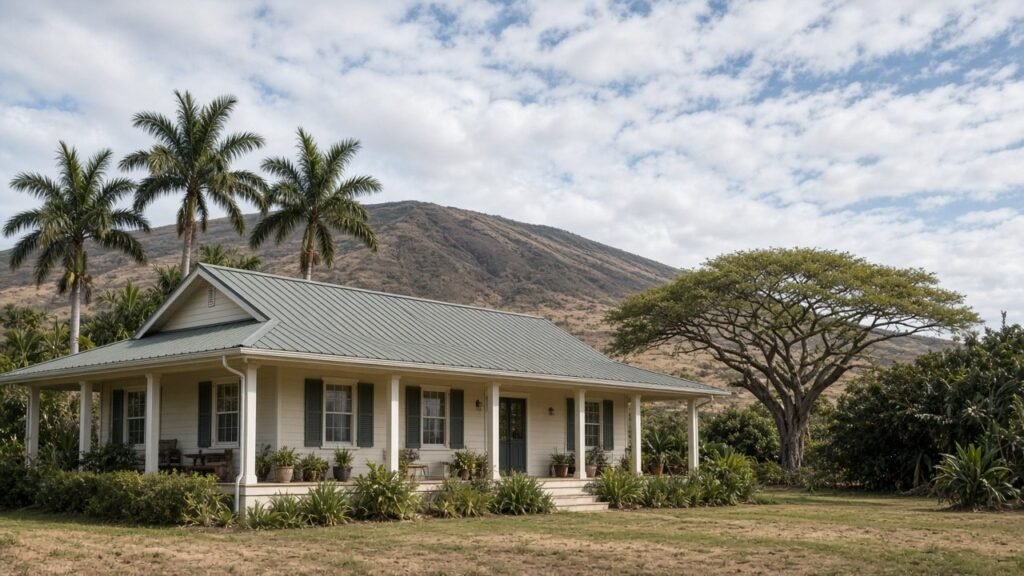
NOAA recommends strengthening your home before hurricane season, while there is time and supplies are available (NOAA). FEMA’s Ready.gov lists inspecting your roof, windows and doors and clearing drains and gutters among the first steps (Ready.gov). Book a professional inspection early, and walk through this list with the roofer:
- Roof covering: lifted, cracked or missing shingles; loose or backed-out screws on metal panels; cracked or slipped tiles.
- Flashing: along walls, around vents, skylights and chimneys, and at valleys. Loose or rusted flashing is where wind-driven rain gets in.
- Ridge and hip caps: caps that are loose, cracked or missing fasteners can peel back in high wind and expose the roof below.
- Sealant at penetrations: dried or cracked sealant around pipes, vents and mounts.
- Edges, fascia and soffits: rot, gaps or loose drip edge where wind can get under the roof covering.
- Gutters and downspouts: secure brackets, clear of leaves, draining away from the foundation.
- Attic and ceilings: water stains, damp insulation, daylight showing through, or rusted nails.
- Roof-to-wall connection: ask whether the roof is tied to the walls with hurricane straps or clips, and what upgrades are practical for your house.
Securing flashing, ridge caps and gutters
Repairs to flashing, caps and gutter brackets should be done by a licensed roofer before the season, not in the days before a storm. Ask for the work in writing and photograph the finished repair for your records. FEMA notes that rain can pool to dangerous levels on a roof, so clean gutters let it drain (FEMA).
Solar panels and rooftop equipment
Have your solar installer check racking, mounts and wiring, and have your roofer check the flashing around every mount. Hawaii’s consumer office notes that most photovoltaic racking requires roof penetrations and recommends coordinating with your roofer and manufacturer so a solar installation doesn’t void a roof warranty (DCCA/RICO). Also check satellite dishes, vent caps, solar water heater panels and anything else fastened to the roof. Don’t try to remove panels yourself.
Trimming trees
FEMA advises trimming or removing trees that could fall onto your house, because hurricane-force winds turn anything unsecured into a projectile (FEMA). Prioritize dead limbs and branches that hang over the roof. Never trim near power lines; contact your utility for those.
What to photograph and document for insurance
FEMA recommends documenting your property with photos or video and keeping copies of policies and records in a safe place, including password-protected digital copies (Ready.gov). NOAA suggests getting an insurance checkup before the season to make sure you have enough coverage to repair or replace your home (NOAA). For the roof, capture:
- Each roof slope from the ground (zoom in rather than climbing)
- Gutters, downspouts, visible flashing, ridge caps and skylights
- Solar panels, solar water heater and other rooftop equipment
- Ceilings in every room and the attic, so you have a dry “before” record
- Your roof’s age, material, last inspection report and repair receipts
- Your policy numbers, insurer phone number and claim instructions, stored off your phone
For how hurricane and windstorm coverage usually works in Hawaii, see the wind damage roof insurance claim guide.
During the storm: stay off the roof
Safety first. Never go on the roof during a storm or while winds are still high. Hawaii’s consumer protection office advises staying off your roof unless it is absolutely necessary (DCCA/RICO). Ready.gov says to shelter in a designated storm shelter or an interior room for high winds (Ready.gov). If a leak starts, catch drips with buckets, move valuables and wait.
Follow official updates from the National Weather Service in Honolulu and MEMA, and evacuate if local officials tell you to.
After the storm: roof damage checklist
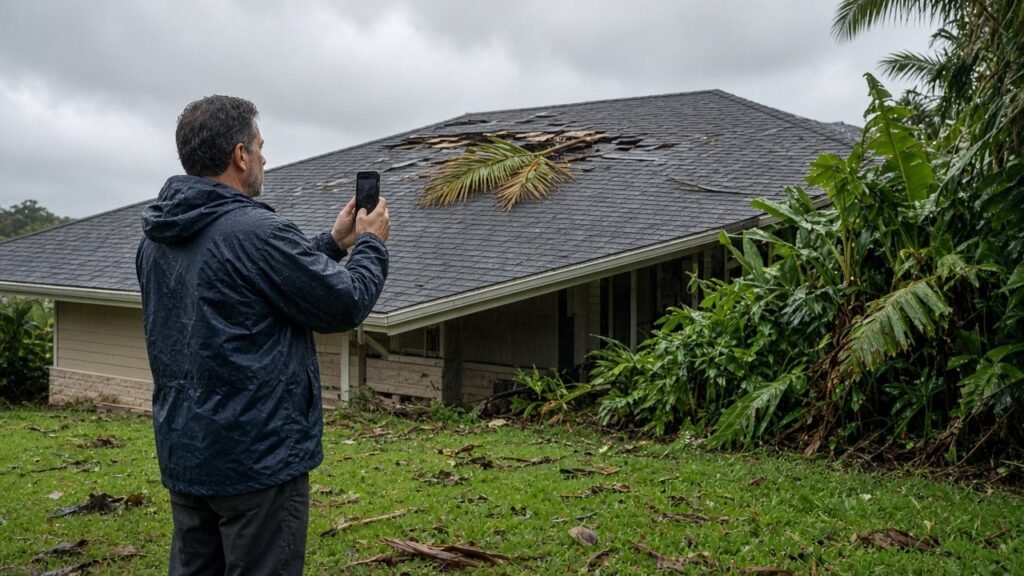
NOAA warns that dangers remain after the skies clear. Return home only when officials say it is safe, walk carefully around the outside to check for downed power lines, gas leaks and structural damage, and leave if you hear shifting or unusual noises (NOAA). Then check, from the ground and from inside:
- Shingles, tiles, panels or ridge caps in the yard or gutters
- Lifted panel edges, missing fasteners or bent flashing
- Tree limbs or debris on the roof
- Gutters pulled loose or downspouts disconnected
- Solar panels or mounts that have shifted
- New ceiling stains, drips or a damp smell in the attic
Ready.gov says to document property damage with photographs and contact your insurance company (Ready.gov). Photograph everything before anything is moved, then keep receipts for emergency work. For a fuller list of what storm damage looks like, see the top signs your roof needs repair after a storm. If you use a generator, NOAA says to run it outside only, more than 20 feet from the house, doors and windows.
Temporary tarping safety
- Let a licensed roofer install emergency tarps. Wet roofing is slippery, and storm-damaged decking may not hold your weight.
- Stay clear of any roof area near downed or sagging power lines.
- Inside, put buckets under drips, move electronics and valuables, and keep wet areas off-limits.
- Photograph the damage before the tarp goes on and after it is installed, and keep the invoice.
- Treat a tarp as temporary. Plan the permanent repair as soon as your insurer and roofer have reviewed the damage.
When to call a licensed roofer
- Before June 1, for a pre-season inspection and any flashing, cap, fastener or gutter repairs
- Any time you find missing or lifted roofing, exposed underlayment or bent flashing
- After any storm that leaves debris on the roof or new stains on ceilings
- Before installing or after moving solar or other rooftop equipment
- When your insurer asks for a written roof damage assessment
Hawaii requires a contractor license for projects that need a building permit, among others (DCCA). Verify any roofer in the DCCA Public License Search, and see how to choose a roofer in Hawaii for the questions to ask and a five-point pre-hire checklist. Maui County building permits are handled by the Department of Public Works; ask your roofer whether your repair needs one.
Download the printable checklist
The free two-page PDF has this timeline, the before, during and after checklists, and the roofer hiring checklist from the companion guide. Print it, keep it with your go-bag, and share it with neighbors.
Download the free printable checklist (PDF, 2 pages)
More Maui roofing guides
- Maui roof repair: top signs you need a fix after a storm
- Wind damage roof insurance claim: step-by-step guide
- How to choose a roofer in Hawaii: 3 questions and a 5-point checklist
- Lava Roofing Maui
Need a roof inspection or storm repair on Maui?
Lava Roofing’s Maui team can be reached at (808) 793-6635 or through the contact page. More local guides are on the Lava Roofing Maui page.
Lava Roofing is a licensed Hawaii contractor (CT-39063). Verify any contractor’s license on the state’s public license search.
Frequently asked questions
When is hurricane season in Maui?
The Central Pacific hurricane season, which includes Maui and the rest of Hawaii, officially runs June 1 through November 30, but NOAA notes tropical cyclones can and do occur year round. Watches and warnings for Maui County are posted by the National Weather Service in Honolulu.
Should I get on my roof to prepare for a hurricane?
Not once a storm is close. Hawaii’s consumer protection office advises staying off your roof unless it is absolutely necessary. Do inspections from the ground, schedule professional roof work well before the season, and leave ladder work to a licensed roofer.
What should I photograph before a hurricane?
Every roof slope from the ground, gutters and downspouts, flashing you can see, solar panels and rooftop equipment, ceilings and the attic, plus the outside of the house. FEMA recommends documenting property with photos or video and storing copies where you can reach them after a disaster.
Should I tarp my roof myself after a storm?
It is safer to have a licensed roofer do it. Wet, damaged roofs are slippery and may hide weakened decking, and NOAA warns that nearly half of hurricane fatalities happen after the storm. From inside, catch drips with buckets and move valuables while you wait.
Sources
- NOAA National Hurricane Center: About the Central Pacific Hurricane Center
- National Weather Service Honolulu (watches and warnings for Maui County)
- Maui Emergency Management Agency: Hurricane Education and Information
- Maui Emergency Management Agency press release, Sept. 5, 2025 (Two Weeks Ready, MEMA Alerts, Genasys Protect)
- County of Maui, Department of Public Works: Building Permit
- NOAA: Prepare Before Hurricane Season
- NOAA: Use Caution After Storms
- FEMA: Six Ways to Prepare Your Home for a Hurricane
- Ready.gov (FEMA): Hurricanes
- Ready.gov (FEMA): Document and Insure Your Property (PDF)
- Hawaii DCCA / RICO: Roofing Tips for Owners (PDF)
- Hawaii DCCA: Hire a Licensed Contractor
- Hawaii DCCA: Public License Search
Disclaimer: This checklist is general information for Maui homeowners, not engineering, insurance or legal advice. Follow instructions from Maui Emergency Management Agency and the National Weather Service during any storm. Your insurance policy wording controls your coverage. Sources were checked on November 20, 2026.